Most guides will tell you two days is enough for Florence. I stayed six nights, seven days — and I still left with a list of places I never reached. By my own reckoning I needed at least five more.
Visited June 2025. Prices below are what I paid at the time.
This guide is what I wish I had read before booking: how long each sight actually takes, what to reserve months ahead, and the quiet corners that make Florence worth slowing down for.
This guide contains affiliate links. If you book through them I may earn a small commission at no extra cost to you.
Why Florence Suits Travelers Over 40
Florence is small. The historic center is walkable end to end in about thirty minutes, which means you can build a day around two or three things rather than a race between them.
I do not drive, which made Florence a relief. Almost everything is walkable, and what is not is reachable by public transport. If you are a non-driver, this is one of the easiest cities in Italy to travel in — a real contrast with the Cotswolds, where we needed a car for everything.
Worth adding: Italian driving is aggressive. Not being behind the wheel was, if anything, a bonus.
It also rewards slowness. That is the whole point for me now. I no longer want to see a famous painting for ninety seconds because a queue is forming behind me — I want to stand in front of the one I like until I am finished with it. Florence lets you do that, if you give it the days.
How Many Days Do You Need in Florence?
Short answer: three days is the bare minimum. Five to seven is where Florence stops being efficient and starts being enjoyable. I had seven, and it was not enough.
The reason is simple: the headline sights take far longer than the guidebooks suggest, once you stop rushing them.
| Sight | Guidebook says | What it actually took me |
|---|---|---|
| Uffizi Gallery | 2–3 hours | Half a day, sometimes more |
| Pitti Palace + Boboli Garden | Half a day | A full day, comfortably |
| Bardini Garden | 1 hour | 1–2 hours with a coffee |
| Piazzale Michelangelo | 1 hour at sunset | Worth going twice — see below |
| Length of stay | What you can realistically do |
|---|---|
| 2 days | The Uffizi and the Duomo complex. Almost nothing else. |
| 3 days | Add Pitti and Boboli — which is a full day on its own. |
| 5 days | Add the Oltrarno, the gardens at a proper pace, gelato worth queueing for. |
| 7 days (what I did) | All of the above unhurried — still no Tuscany. |
| 10–12 days | Florence, Siena, plus the hill towns. |
What did I miss? Siena, Fiesole, and Tuscany generally. The Villa La Petraia was on my list too, though that one was closed for restoration — worth checking before you build a day around any of the Medici villas.
Seven days sounded generous when I booked. In practice the city absorbed all of it, so the hill towns stayed on the list. If day trips into Tuscany matter to you, treat them as extra days, not as something you will slot in.
If your trip is part of a wider Italy route, be honest about arrival and departure days. A “four day” stay that begins at 6 p.m. on day one and ends at 9 a.m. on day four is really two and a half days.
Getting to Florence
I flew in from London Heathrow to Florence Airport, then took the tram straight to Santa Maria Novella station. It is a short, simple ride — no taxi needed, no transfers to work out with luggage. If you are combining Florence with a stay in the UK, this is an easy pairing.
Florence sits on the main high-speed line, so it is one of the easiest Italian cities to reach by train. Santa Maria Novella station is a ten-minute walk from the Duomo.
The Museums Worth Booking Ahead (and How Far Ahead)
🎟️ Timed tickets sell out first
Skip-the-line entry for the Uffizi, Pitti and the Accademia can be booked well ahead. Worth doing the moment your dates are fixed.
The Uffizi: I booked three months ahead, and needed half a day
I reserved my Uffizi slot three months before the trip. That is not an exaggeration for effect — it is what I actually did, and I would do it again. Timed entry is the norm, the good slots go first, and the walk-in queue in high season is not one you want to join.
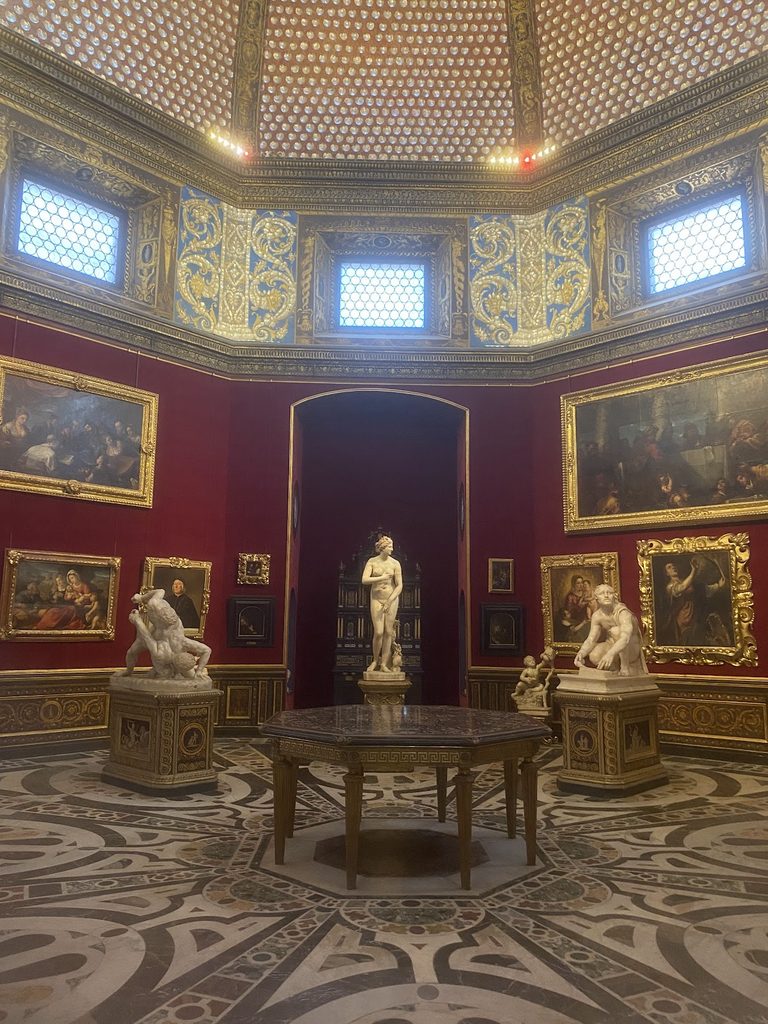
Allow more time inside than you think. Most itineraries budget two hours. I needed half a day, easily. Partly that is the collection, but it is also the building: the painted ceilings, the corridor windows looking down on the Arno, the rooms themselves. If you only watch the walls you miss half of it.
The other reason is simpler. When I find a painting I love, I want to stay with it until I am ready to move on, not until the clock says so. Budget for that.
Pitti Palace and Boboli: give it a whole day
Pitti Palace and the Boboli Garden together are a full day. They are sold as a half-day pairing. They are not, unless you walk past everything.
Inside Pitti, most visitors never find the Costume Museum — one of the quietest, most rewarding rooms in the city if you have any interest in clothes, textiles, and how people actually lived.
One object stayed with me more than the paintings: a table topped with green marble. I was told the stone came from near Florence, and that it can no longer be quarried.
That checks out, at least for the region. The local green stone is verde di Prato, a serpentine cut from the hills near Prato since at least the twelfth century — the same green you see banding the Duomo. Those quarries are closed now. The historic site at Pian di Gello is shut, and the later workings were abandoned in the 1990s.
I cannot say for certain that this particular table used that particular stone; the Medici bought materials from far away too. But the thought is the same either way. Some of what you are looking at simply cannot be made again.
The Accademia: I skipped it this time
I did not visit the Accademia on this trip — I had already seen the David on an earlier visit to Florence. If this is your first time, add it and book ahead, the same way you would the Uffizi.
The Gardens Most People Miss
If you only have time for one garden, the choice matters more than people realize. They are very different.
| Boboli | Bardini | |
|---|---|---|
| Size | Large, terraced, a proper walk | Small, steep, quick to see |
| Time to allow | Half a day with Pitti | 1–2 hours |
| The view | Tuscan hills from the top | The classic rooftop panorama |
| Crowds | Busier | Usually quieter |
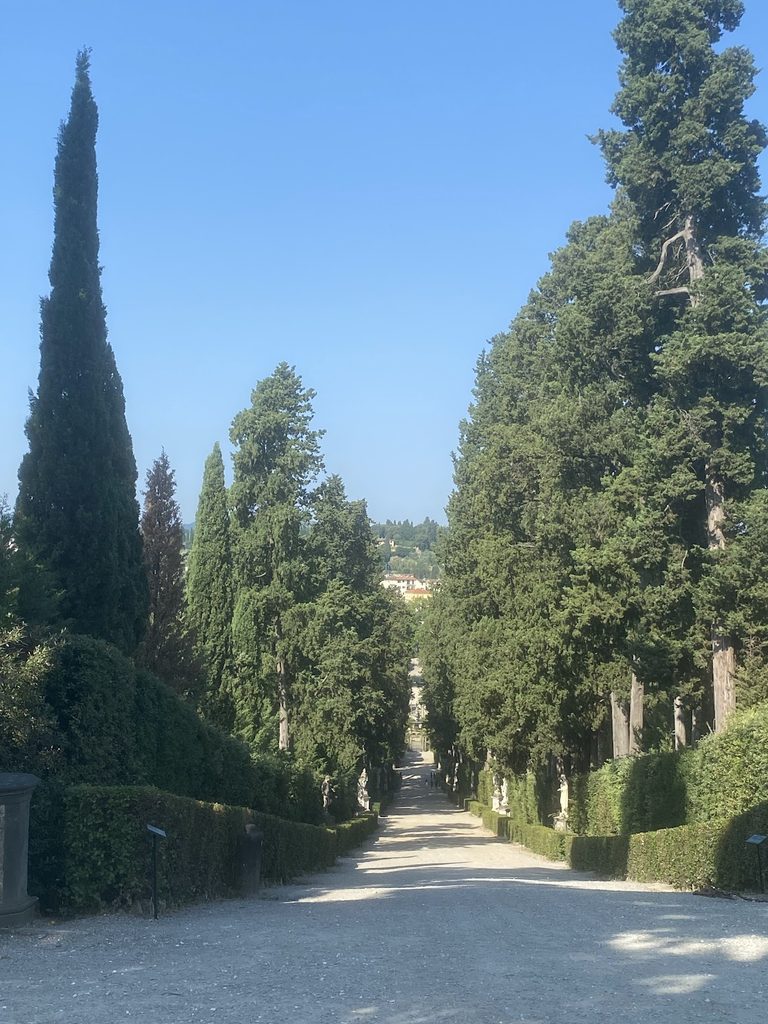
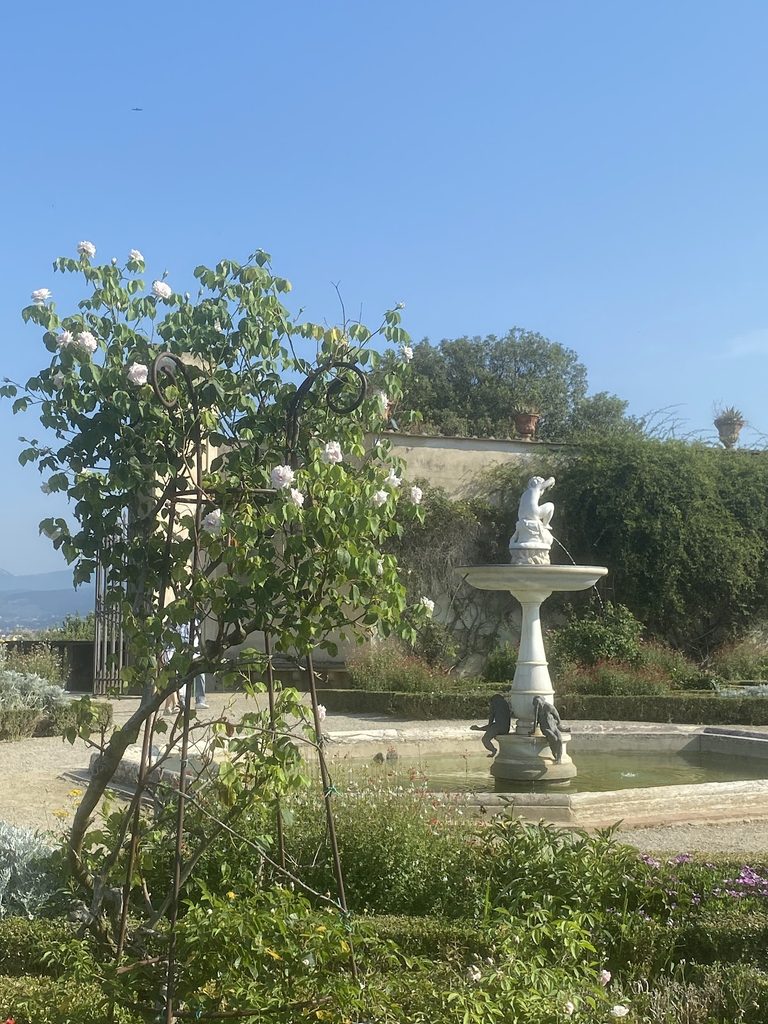
I wrote about both in detail: Boboli Garden: 4 must-see spotsand Bardini Garden, the hidden one with the best view.
Piazzale Michelangelo: Go in the Morning, Not Only at Sunset
Everyone goes at sunset. It is genuinely beautiful and genuinely packed — shoulder to shoulder, phones in the air.
I went in the early morning as well, when it was almost empty. The light is different, softer on the terracotta, and you can actually stand at the balustrade. If you can only go once, sunset is the postcard. If you can go twice, the morning is the one you will remember.
The abbey shop above the piazzale — my favorite find in Florence
Here is the part almost no guide mentions. Climb the steps above Piazzale Michelangelo and you reach the Abbey of San Miniato al Monte, sitting quietly above the crowd that never walks up.
Beside the church there is a shop run by the Olivetan monks. The Olivetan monks took over the abbey in 1373, so the pharmacy tradition here long predates the famous one down in the center that most visitors queue for instead. I wrote about that one here; this is the older, quieter alternative.
A monk served me himself. Unhurried, kind, entirely unlike shopping anywhere else in Florence. That alone was worth the climb.
I bought two perfumes: a lemon scent and Acqua di Sandalo, a sandalwood water made by the Trappist nuns of Monastero Valserena in Tuscany. A 100ml bottle came to well under €30 — unusually reasonable for this city. They also sell baked goods, plain and honest in the best sense, along with honey, herbal teas, and liqueurs the monks make themselves.
Medici Chapels: Where to Go When It Rains in Florence
Seven days in Florence means you will get at least one bad-weather day. Mine went to the Medici Chapels, which turned out to be the right call.
The stonework is extraordinary — inlaid stone on a scale you do not expect until you are standing under it. I had not planned to be moved by a chapel interior. I was.
It is inlaid stone — fragments of colored marble and semi-precious stone, cut and fitted like a jigsaw across whole walls. Photographs do not convey the scale of the labour. Standing under it does.
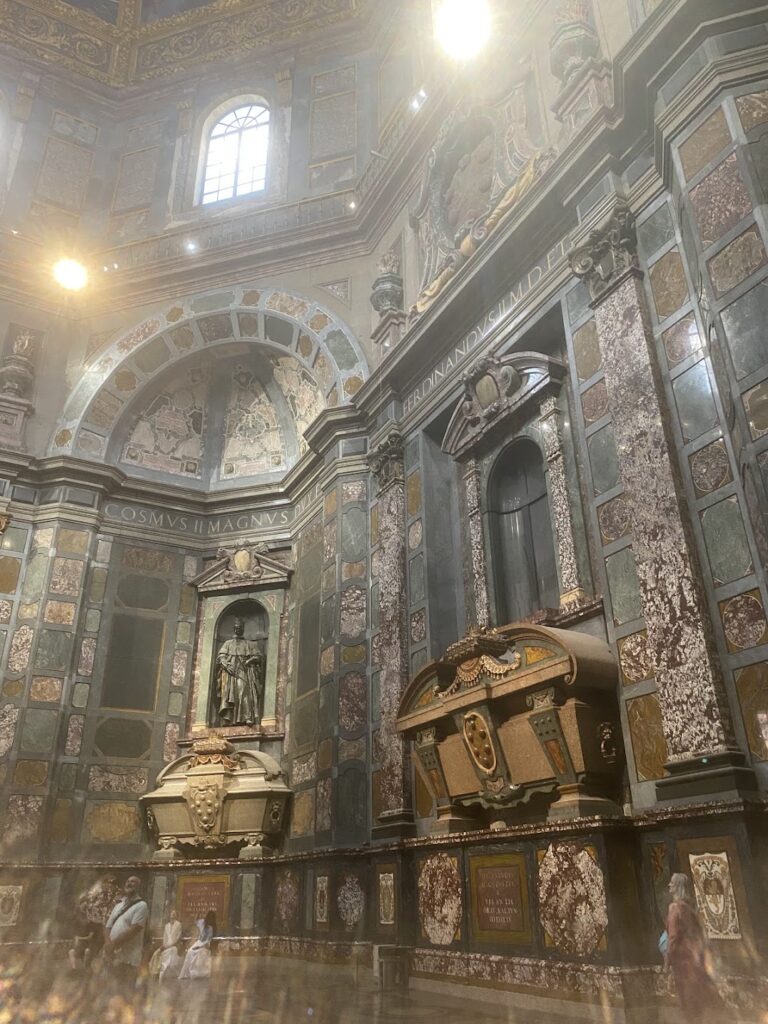
Allow about 90 minutes.
| Opening hours | 8:15 a.m. – 6:50 p.m. (last entry 40 minutes before closing) |
| Weekly closing day | Mondays — confirm on the official site before you go |
| Admission | €11 full, €2 reduced (EU citizens 18–25), free under 18 |
| Also closed | 25 December, 1 January |
| Time to allow | about 90 minutes |
A 38-euro combined ticket, valid 72 hours, covers this site and the other museums in the Bargello group, including the Accademia and the Bargello itself. If you plan to see more than one of them, that is the better buy.
The one thing that does catch people out is the weekly closing day. Check it against your dates before you plan an afternoon here, because the museums in this group do not all close on the same day.
Rain also suits the Uffizi, Pitti, and the Costume Museum. Save the gardens and Piazzale Michelangelo for a clear day — they lose most of their point in the wet.
Where to Have Coffee (and Why the Price Changes)
In Italy the same cappuccino costs one price standing at the bar, roughly three times that sitting at a table. It is normal, it is posted, it is not a tourist trap — but it surprises people.
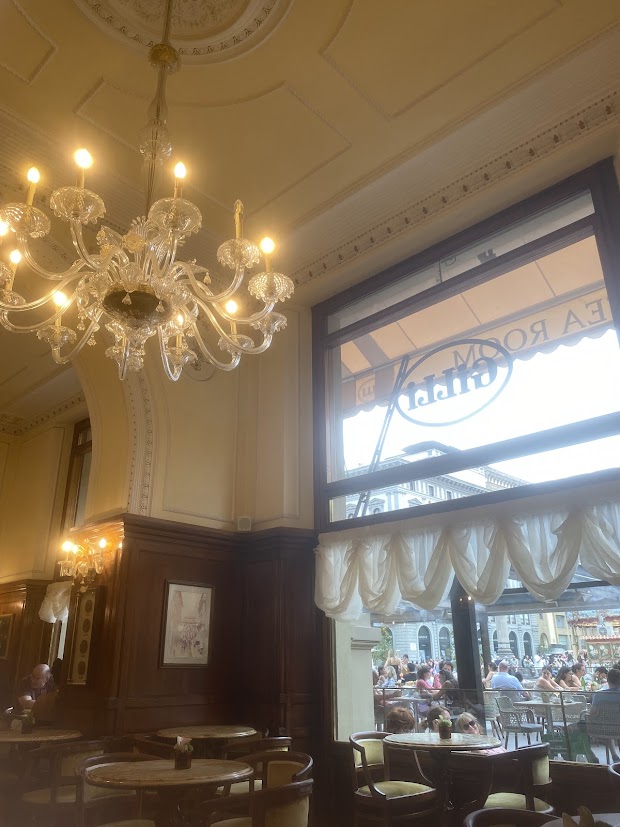
At Caffè Gilli, where I went six times in one week, standing cost about €6.80 for a cappuccino and a cake. Sitting with a tiramisu came to about €16.
Gelato and Panini: Budget More Days Than You Think
Florence is a city where the cheap food is as memorable as the museums, which is another reason seven days was not enough.
Gelato
I managed three of the shops I had been told to try. I wanted more. Three sounds like plenty until you are there — the good places are spread across the city, and one gelato a day is really the limit.
The three I reached:
- Vivoli — Via Isola delle Stinche, in Santa Croce. Generally called the oldest gelateria in Florence: the family opened as a dairy in 1929, then started making gelato in 1932. Served in cups only, no cones, which tells you how seriously they take it. The room is properly old-fashioned and lovely for it, and the gelato lived up to the name.
- Gelateria La Carraia — by the Ponte alla Carraia on the Oltrarno side. Dense and properly cold, not the fluffy piled-up sort aimed at passing tourists. The fruit flavours were the standout — genuinely fresh, tasting of the fruit rather than of sugar.
- Venchi — reliable, though you will find it all over Italy rather than only here.
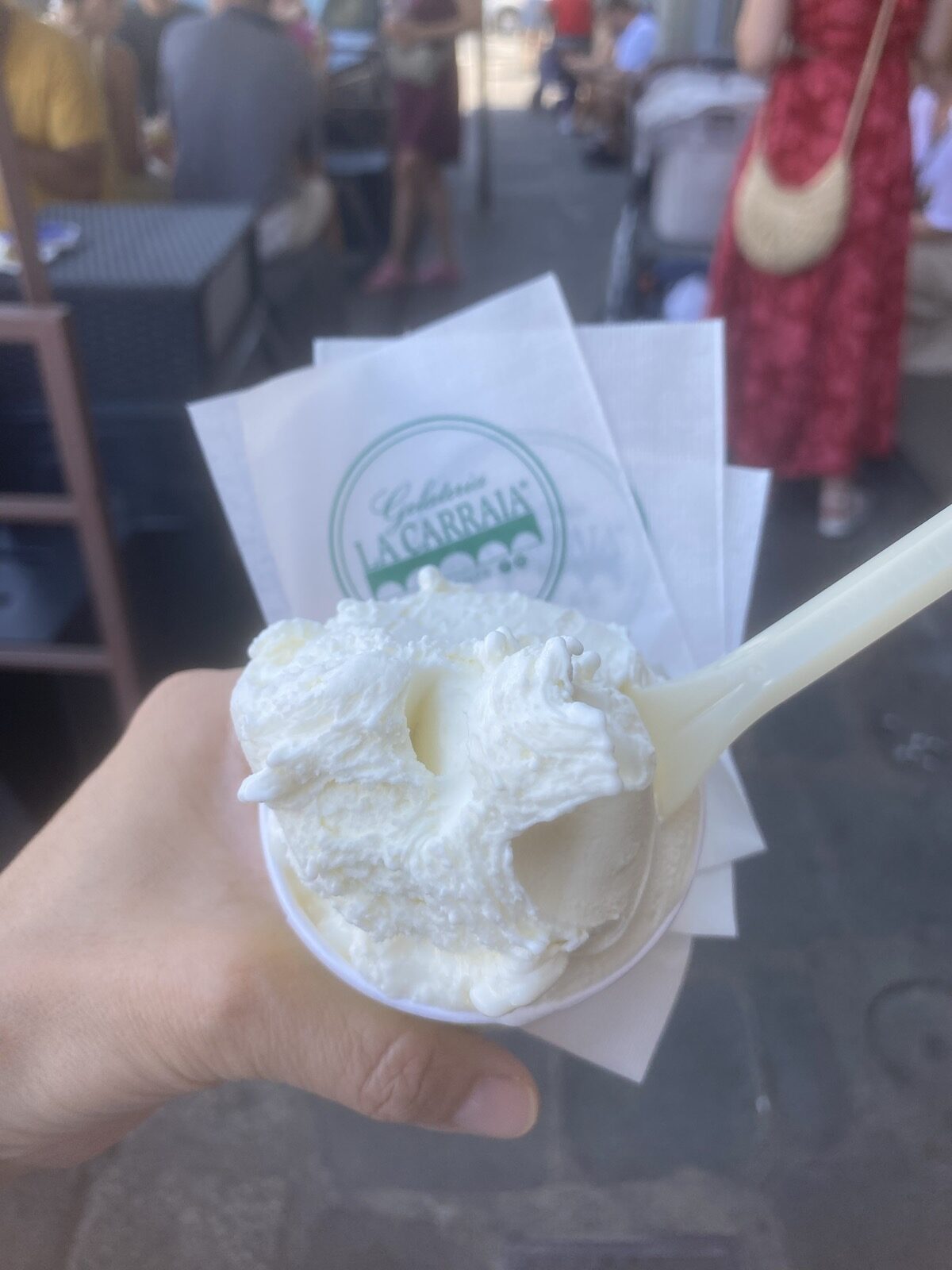
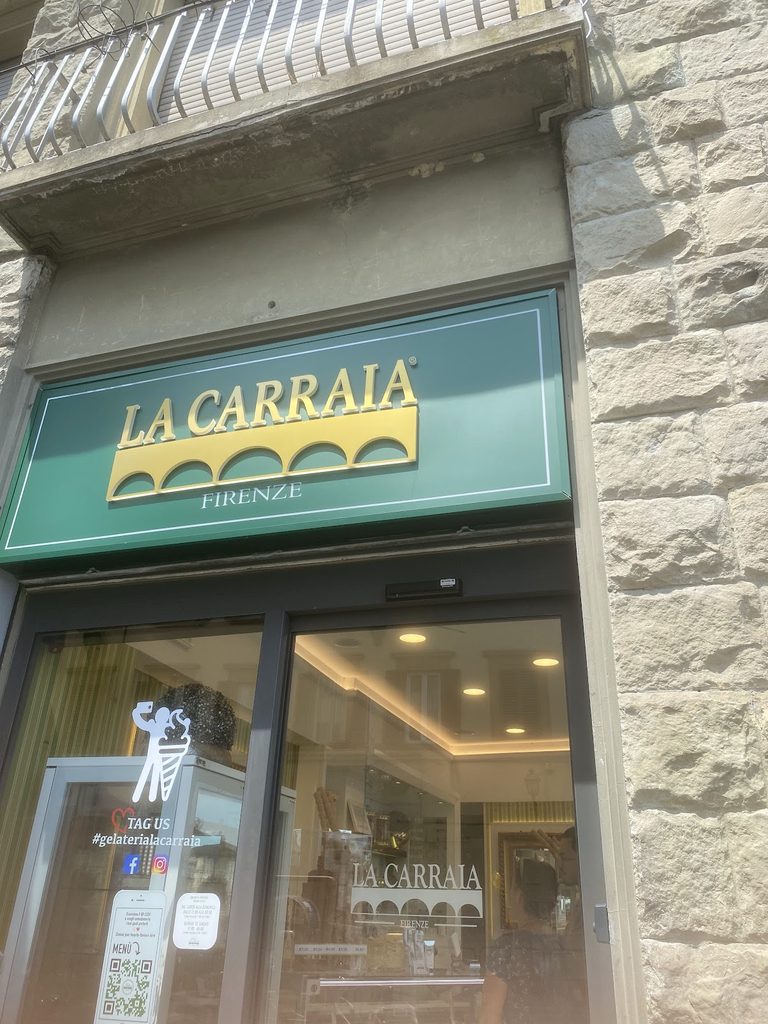
Three in a week sounds like plenty. It is not. The good places are scattered across the city, and one gelato a day is honestly the limit.
Panini
The panini place I found was the best I have eaten anywhere — not the best in Florence, the best full stop. I wanted to work through several fillings. I ran out of days and managed far fewer than I planned.
The place was I’ Girone de’ Ghiotti, at Via dei Cimatori 23. A small family-run shop doing schiacciata — the Tuscan flatbread, crisp outside, soft inside, filled generously. There was a queue out of the door when we went, which tells you what the locals think.
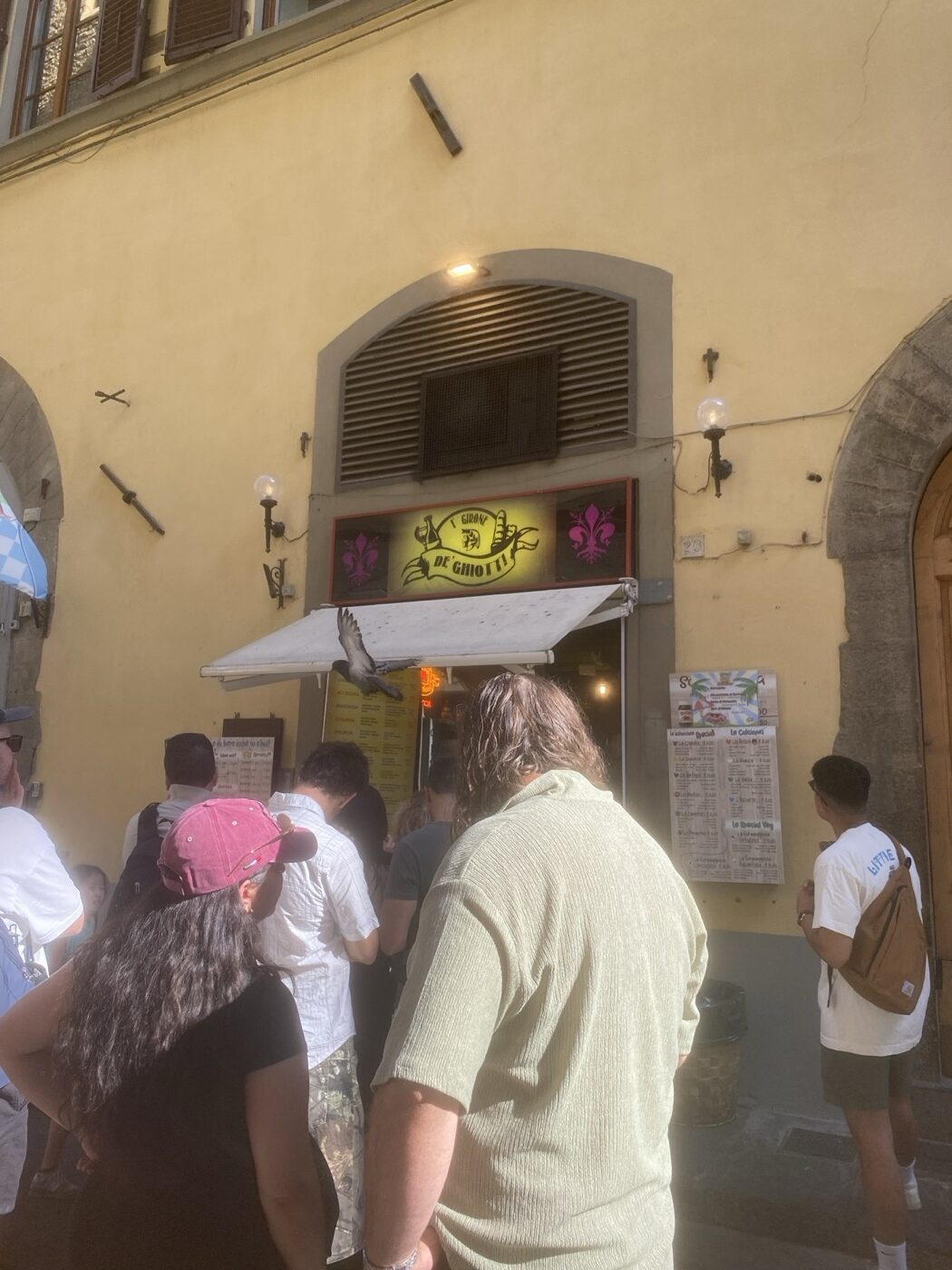
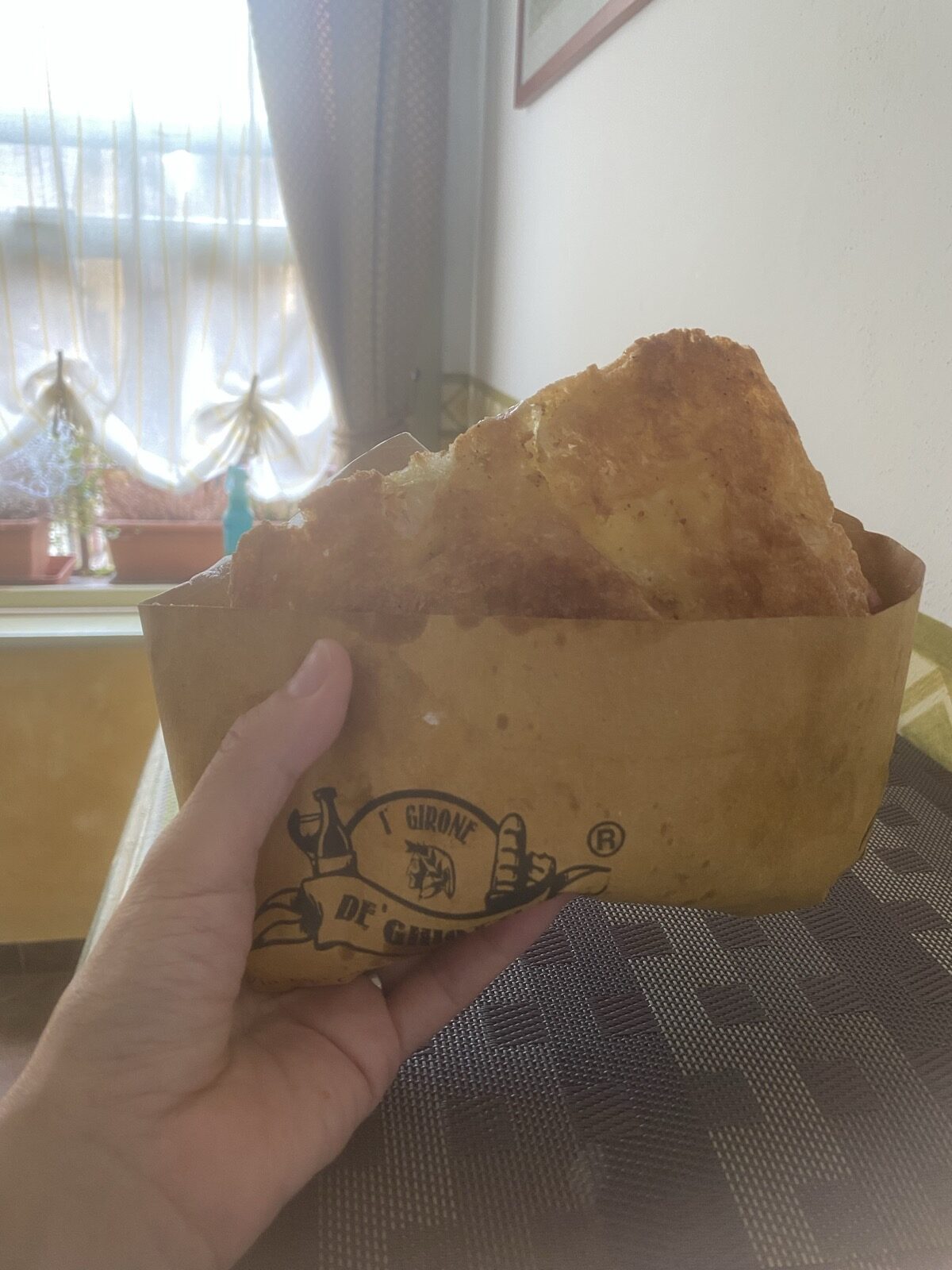
What arrived was so large I could barely hold it in one hand. I wanted to come back and work through the other fillings. Seven days, and I never managed it.
There is a small seating area upstairs, though most people take it away and eat it somewhere with a view.
What to Buy in Florence
Santa Maria Novella is the world’s oldest pharmacy, and the shop is worth entering even if you buy nothing. For food, olive oil, pasta, and edible gifts, EATALY is the practical answer. For something quieter, see the monastery above the piazzale.
Staying Safe in Florence
I had an attempted pickpocketing in Italy. It was not dramatic, which is exactly the point — it happens quietly, in a crowd, while you are looking at something else.
Here is exactly what happened, and the four things I now travel with.
What to Wear
Florence in summer is hot and the streets are stone, so shoes matter more than outfits. Churches require covered shoulders and knees, which makes a light scarf worth its space.
My full seasonal list: what to wear in Italy in June.
Where to Stay
I stayed about five minutes on foot from the Ponte Vecchio, on one of the main streets. Being that central meant I could walk back to the hotel in the middle of the day, which on a hot week matters more than you expect.
🛏️ Where I stayed, and what it cost
Central hotels near the Ponte Vecchio are the expensive option; the Oltrarno is quieter and usually better value. Compare both before choosing.
Broadly: inside the historic center you walk everywhere and pay for it. Across the river in the Oltrarno is quieter, still walkable, usually better value.
Frequently Asked Questions
Is three days enough for Florence?
It is enough for the Uffizi and the Duomo, little else. Pitti and Boboli alone take a full day. I had seven days and still missed Siena.
How long do you need at the Uffizi?
Half a day if you want to look properly, including at the building itself. Two hours only works if you walk briskly past most of it.
How far ahead should I book the Uffizi?
I booked three months ahead. For fixed travel dates in high season, book as soon as your flights are confirmed.
Is Florence walkable?
Yes — about thirty minutes end to end. Comfortable shoes matter more than any other packing decision.
When is the best time to visit Piazzale Michelangelo?
Sunset for the classic view, early morning for the calm one. If you can manage both, do.
🧭 Prefer to explore with a local guide?
GoWithGuide connects solo travelers with vetted local guides in Florence. Private, fully customizable, and you can message your guide before booking.
Pair Florence With Lake Como
Building a longer Italy route? See my Lake Como first-timer’s guide.