Two of us. Two hundred and forty pounds. That is what afternoon tea at Claridge’s came to, including the sparkling water — about £120 a head.
I take afternoon tea roughly once a month at home in Japan, so I thought I knew what I was booking. I did not. It remains, without argument, the best afternoon tea I have ever had. This is what the money actually buys, how to get a table, and the one decision that made the price make sense.
Visited June 2025. Prices are what I paid at the time.
This article contains affiliate links. If you book through them I may earn a small commission at no extra cost to you.
The short version
- What I paid: £240 for two, including sparkling water
- Booking: reservations open three months out. I booked on the day they opened. Walk-ins were being turned away all afternoon
- Best slot: I chose 5 p.m. and treated it as dinner — which is what made the price defensible
- Water is not included. You are asked to choose still against sparkling before you see the menu
- Leftovers are boxed to take home, ribbon, plus a small gift chocolate
How Much Is Afternoon Tea at Claridge’s?
Our bill came to £240 for two people, which included the sparkling water we were asked about on sitting down. That works out at roughly £120 each — more than double what a comparable sitting costs in Tokyo.
| Option | Listed price |
|---|---|
| Traditional Afternoon Tea | from £95 per person |
| Champagne Afternoon Tea | from £110 |
| Rosé Champagne Afternoon Tea | from £125 |
| Seasonal Afternoon Tea | from £125 |
| What I actually paid, two people | £240 total, including sparkling water |
The gap between the headline price and the final bill is worth planning for. The tea is one price, the water is extra, service is added, and anything from the champagne list is extra again. Budget closer to £120 a head than £95.
Booking: Reserve on the Day Reservations Open
Claridge’s takes bookings roughly three months in advance — widely reported as 89 days. I put ours in the moment the date opened, for 5 p.m. It turned out to be the right call.
When we arrived, the woman at the entrance was working steadily through a stream of people without reservations — a surprising number — telling them a table might free up later if they cared to wait in the lobby. Very few tables did.
We arrived at 4:40 p.m. for a 5 p.m. booking and were seated in about ten minutes.
One detail worth knowing: service reportedly runs from 2:45 p.m. to about 5:30 p.m., so 5 p.m. is close to the last sitting. If you intend to do what I did, aim for those final slots. Confirm the current times when you book — the hotel does not publish them on its main page.
Couldn’t get a table? Claridge’s fills fast, plus walk-ins rarely get in. If your dates are fully booked, these two hotel afternoon teas can be reserved online in advance:
👉 Afternoon Tea at The Milestone Hotel London — 4.5★, 87 reviews
👉 Afternoon Tea at The Rubens at the Palace, near Buckingham Palace — 4.5★, 261 reviews
I have not tried either myself. They are simply the closest in style I could find that take advance bookings.
The Decision That Made the Price Work: Book 5 p.m., Skip Dinner
I booked the 5 p.m. sitting deliberately and treated it as the evening meal. That single choice changed the arithmetic.
At £120 a head as an afternoon snack, this is an extravagance that stings. At £120 a head as dinner in a five-star London hotel, with the room, the piano, and the service included, it reads very differently. We ate sandwiches, three scones each, and a plate of pastries. Neither of us wanted dinner afterwards.
If the price is what is holding you back, this is the workaround. Book late, eat properly, do not plan a restaurant that evening.
Arriving: The Doorman, the Lobby, the Staircase
We walked over from Liberty, seven or eight minutes away. I had brought proper folding shoes and changed into them in the Liberty cloakroom before heading across — a small thing that made me feel far more comfortable walking in.
The main entrance is a revolving door. I was taking a photograph outside when the doorman came over and offered to take one for us. When the face of a hotel is that gracious, the whole impression shifts before you are through the door.
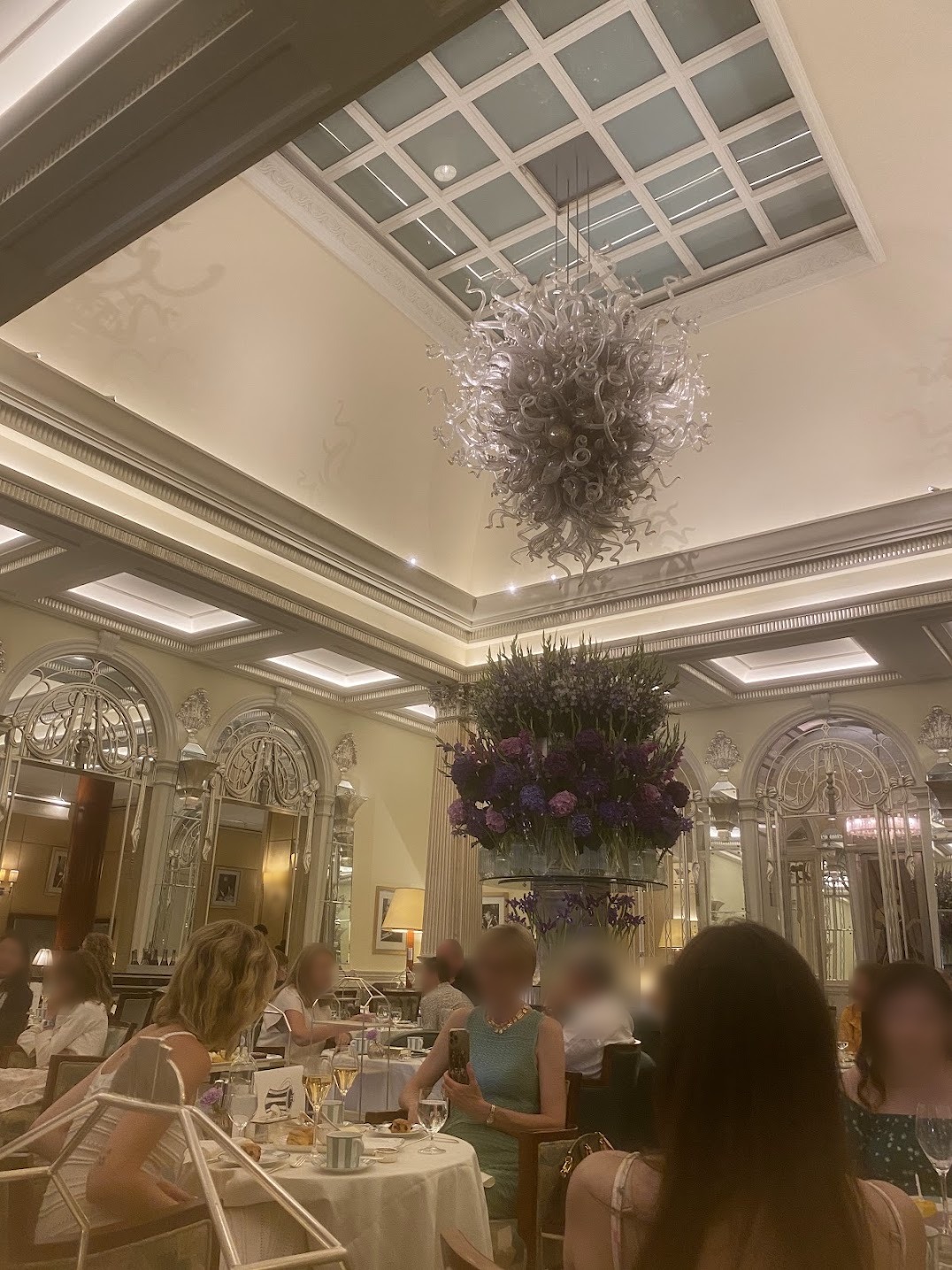
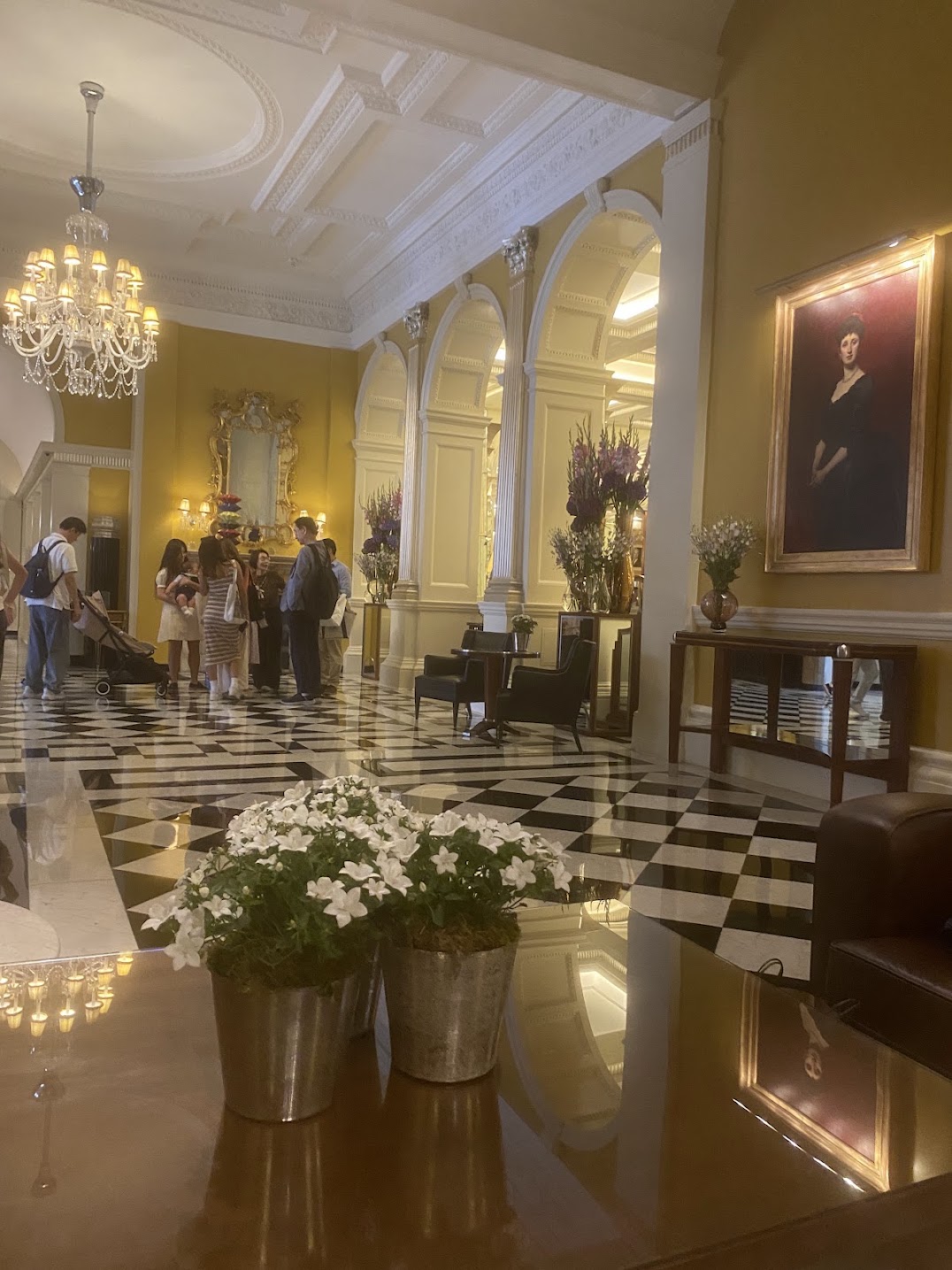
Inside: Art Deco chandeliers, a floor worth looking down at, flowers arranged with real judgement in every corner. Glamorous without a trace of glare. Beside the famous staircase the arrangement was opulent, while the table in front of it held plain white flowers, almost like something picked from a field. The contrast was exactly right.
A note on the cloakroom
I could happily live in that cloakroom. Spotless, beautifully scented, an Art Deco lamp on the dressing table.
There were also two attendants in uniform. Step out of a cubicle and one turns the tap on for you, then hands you a thick towel and turns it off again. A dish for tips sits beside the basin, into which the wealthiest guests dropped several pounds without breaking conversation.
I could not bring myself to pay £1 for a visit to the loo, so I quietly took advantage of their generosity instead. The first time, I was handed a towel — presumably mistaken for someone from a wealthier corner of Asia. The second time, with my friend, we were both comprehensively ignored. I laughed about it for the rest of the trip.
The Room: Live Piano, Plus Who Else Is There
There is a live pianist. The room is elegant in a way that does not need to announce itself. Guests looked to be about half visitors, half well-off Londoners.
At the next table, six women with Hermès and Chanel bags were holding a small party — not taking afternoon tea at all, but ordering shrimp cocktail and steak. It had not occurred to me that you could simply have dinner in the tea room. Evidently you can.
The Tea: Small Pots, So You Can Try Several
Before the menu arrives you are asked whether you would like still water and sparkling. We chose sparkling, it arrived alongside the menus, and it appeared on the bill. Water is not included — worth knowing.
The menu itself is charming, with an illustration inside the cover showing the very flower arrangement that stands in the center of the room.
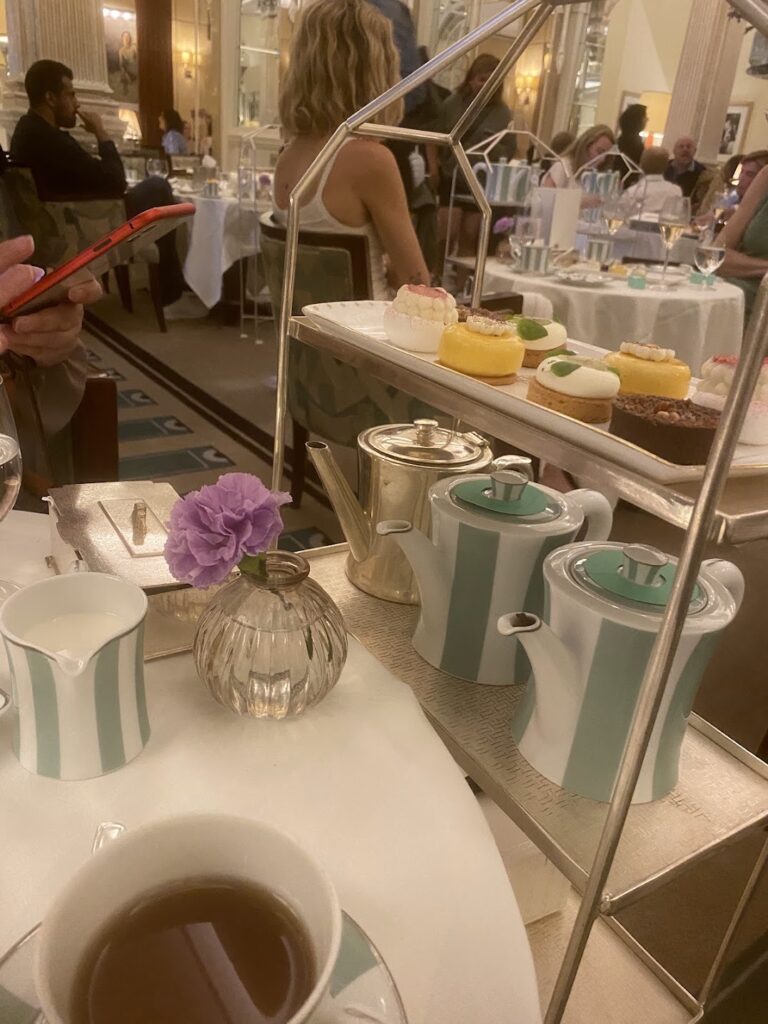
The teapots are small — about a cup and a half. That sounds mean until you realize the point: you can work through several teas in one sitting rather than committing to a single pot. We had four between us.
Claridge’s own Darjeeling was so easy to drink that I ordered it twice. We also tried mint, and lemon ginger. Every one tasted of good raw material. A waiter appeared at exactly the right moments to ask whether we wanted more, which made ordering feel easy rather than fussy.
The Food, Course by Course
The single thing I would tell anyone about Claridge’s is this: you can taste the quality of the raw ingredients in every element. Not the presentation, not the technique — the materials themselves.
The tea, the sandwiches, the scones, the clotted cream, the preserve, the pastries. Every one of them tasted of something good that had been sourced properly, then left alone. That is not something you can fake, and it is a large part of what you are paying for.
Sandwiches
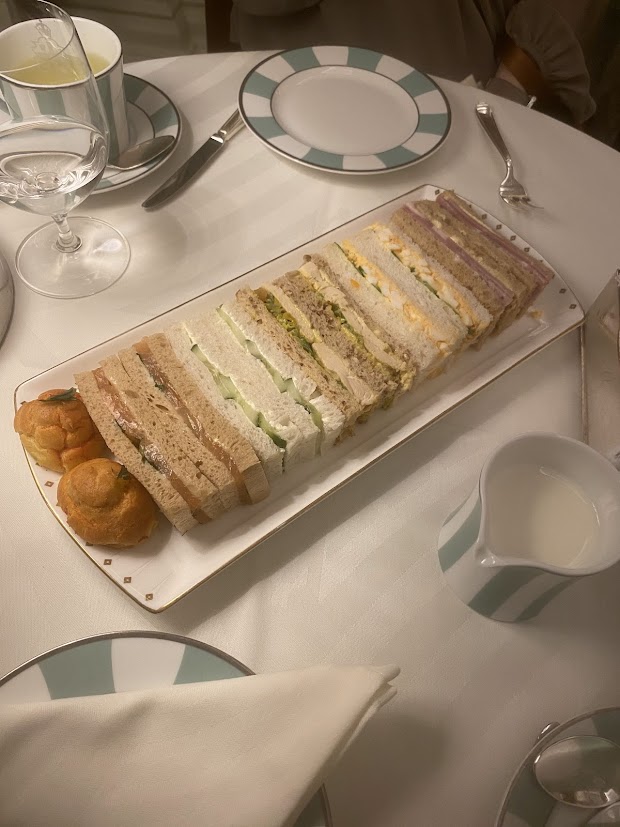
Served first, on a long plate. Good, unshowy. The tableware is worth noticing: mint green and white, gold only on the rim, the hotel logo small and discreet. It sits perfectly with the Art Deco interior.
Scones — the best part
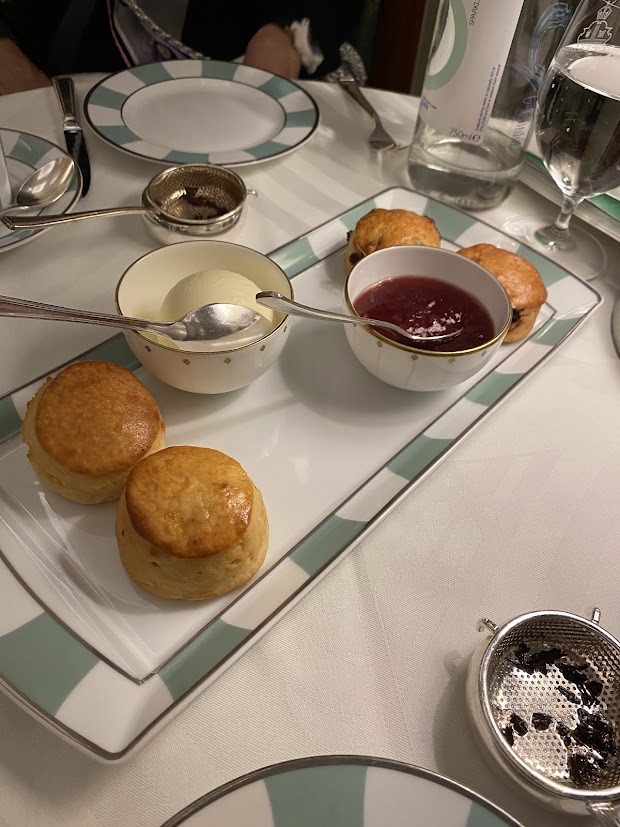
Plain and raisin, small — roughly a third the size of the ones at Highclere Castle and the Manor House, which suited me perfectly.
The clotted cream rewrote what I thought clotted cream was. It stretched, like Turkish ice cream, barely sweet, closer to an extremely good gelato than to anything I had eaten under that name. The preserve was proper berry fruit, restrained on sugar, good enough to eat on its own.
I am not usually someone who piles on cream and jam. I piled on both. When they asked whether I would like more scones I said yes, they brought two each, and I ate a third.
If the scones are the part that stays with you, a small-group scone baking workshop with traditional tea in London is rated 4.9 from 554 reviews. It is a one-hour class. I have not tried it myself.
👉 Check availability: London Scone Making & Tea Workshop →
Pastries
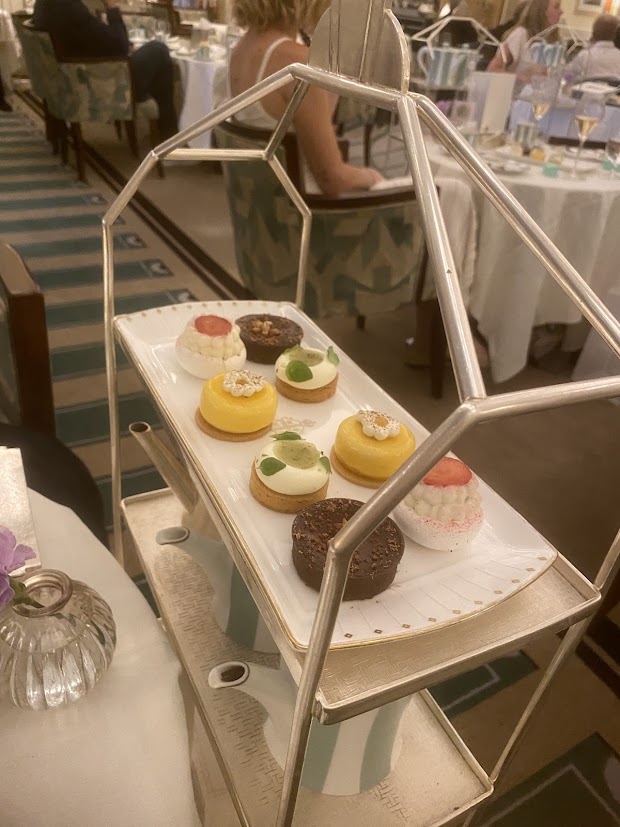
Wheeled over on an elegant silver trolley along with the teapot. On our visit: a chocolate tart, a sablé breton with yoghurt and lime mint, apricot with honey, a vanilla mousse, and a strawberry vacherin.
By this point I was full, so I ordered a coffee, which they were happy to bring.
You Can Take the Leftovers Home
This surprised me. Anything you cannot finish is boxed — a proper box, tied with a ribbon, presented in a paper bag with a small gift chocolate.
Back at the hotel I opened it to find that the scone I had already started had been swapped for a fresh one. The clotted cream and preserve came in little jars, though I have to be honest: they were not the same as what had been served at the table. I suspect the recipe is adjusted so it travels.
For comparison: the same trip took me to the Manor House at Castle Combe, where afternoon tea in a 14th-century manor came to about £60 a head, and to the Orangery at Kensington Palace, where ordering breakfast instead of the full service put two of us in the same grand room for about £50.
Is It Worth £120 a Head?
For me, yes — once, and deliberately.
I have taken afternoon tea about once a month for years. This was, by a clear margin, the best one I have had anywhere. Not the prettiest, not the most inventive — the best. That is a judgement made against a great many others, not a first impression.
This is a considerable amount of money. One person here costs what two people cost at a luxury hotel in Tokyo. But the service and the flavour were both in a different class from anything I have had at home, and the experience is not one you can buy anywhere else at any price.
Book the late sitting, call it dinner, take the leftovers home, and it becomes a special occasion rather than an indulgence you regret at the till.
🛏️ Making a night of it
Mayfair is expensive to stay in, but if you are booking the 5 p.m. sitting as dinner, a hotel within walking distance changes the evening.
Frequently Asked Questions
How much is afternoon tea at Claridge’s?
My bill was £240 for two including sparkling water, so about £120 each. Confirm current pricing on the hotel’s own site.
How far ahead do I need to book Claridge’s afternoon tea?
Reservations open three months ahead. I booked on the opening day and would advise doing the same. Walk-ins were being turned away throughout our sitting.
Is water included?
No. You are asked to choose still against sparkling before the menu arrives, and it is charged separately.
Can you take leftovers home?
Yes, and they do it beautifully — boxed with a ribbon, with a small chocolate. My part-eaten scone was replaced with a fresh one.
What should I wear?
Smart-casual works. I changed into proper shoes beforehand, which was worth the small effort.
📍 This is part of my guide to afternoon tea in London and beyond — prices compared across a palace, a grand hotel, a castle, and a country manor.